

The cryptocurrency market today feels like it’s standing at a crossroads. After years of boom-and-bust cycles, global regulation battles, major technological leaps, and institutional entry, the question that echoes across every trading desk, crypto community, and investor call is simple:
Where is the whole crypto market headed next?
Despite the noise, the uncertainty, and the extreme volatility, if you zoom out far enough, a clear direction begins to emerge one shaped by real-world adoption, global economic shifts, and the evolution of blockchain technology itself.
A Market Maturing in Real Time
What’s happening in the crypto ecosystem right now is something we didn’t see in 2017 or 2021. Back then, markets were driven mostly by hype cycles. In contrast, today’s crypto market is slowly but surely becoming woven into the mainstream financial system.
Every day, the cryptocurrency news cycle is filled with updates about banks experimenting with tokenization, large corporations adopting blockchain-based payment rails, and governments slowly setting rules rather than banning innovation. Even during dips, cryptocurrency prices have shown stronger recoveries than earlier cycles because the foundation is getting stronger.
The global crypto market cap still sways aggressively, but long-term holders, institutional inflows, and on-chain accumulation show one consistent theme: long-term confidence.
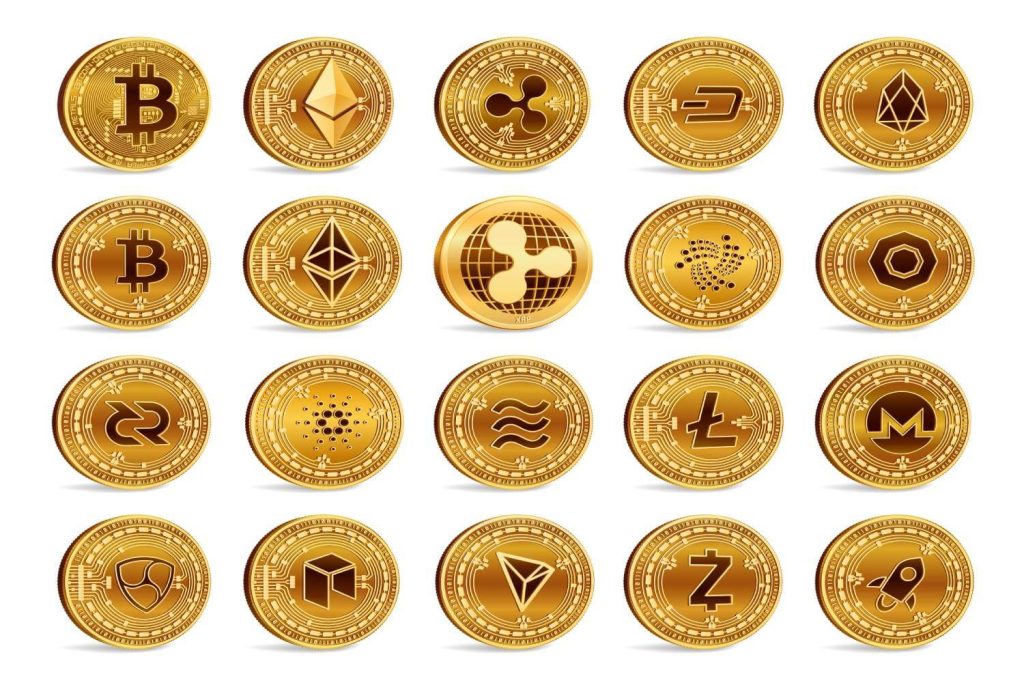
Institutional Capital Is Rewriting the Market’s Future
If retail investors built the early crypto scene, institutions are building the next chapter.
Bitcoin and Ethereum ETFs have turned crypto from a niche asset class into something that sits on the same dashboards as stocks, commodities, and bonds. Billions of dollars have flowed into these products, offering price support on bad days and amplifying gains on good days.
This steady institutional presence has changed market behavior. Whenever ETF inflows rise, you see immediate signals across cryptocurrency prices and crypto market news.
Crypto is no longer an outsider—it’s part of global financial infrastructure.
Beyond ETFs, tokenization is gaining massive attention. BlackRock, JPMorgan, and other giants are now digitizing real-world assets—bonds, funds, even real estate—on blockchain networks. This shift could trigger one of the biggest expansions of the cryptocurrency market in history, because it brings real economic activity on-chain.
Retail Investors Are Becoming Smarter
Retail is still here—but it has matured.
Yes, searches for a new cryptocurrency to invest in spike whenever the market heats up. But overall, people today understand far more about crypto currency investment than they did five years ago.
More investors now dollar-cost average. They read the charts, follow fundamentals, watch global policy updates, and understand the nature of volatility. Retail participation has shifted from pure speculation to strategic accumulation—especially around Bitcoin, Ethereum, Solana, and high-conviction altcoins.
And when retail does enter a frenzy—like with memes or trending AI tokens—it’s usually after institutional liquidity has already begun warming up.
Regulation: From Enemy to Accelerator
For years, regulation was seen as crypto’s biggest threat. Today, it’s becoming its biggest growth engine.
The United States is moving slow, but every court ruling and ETF approval widens the path for innovation. Europe’s MiCA framework has brought clarity, security, and predictability. Meanwhile, Asia especially Singapore, UAE, Japan, and Hong Kong is becoming a powerhouse for exchange licensing, stablecoin regulations, and trading-friendly policies.
The more regulated the environment becomes, the safer large investors feel. That means more liquidity, more adoption, and stronger fundamentals for the entire crypto market.
Bitcoin Steers the Ship, But Altcoins Are Warming Up
Bitcoin is still the captain of the digital-asset ship. Its market structure is stronger than ever—long-term holders accumulate more each cycle, exchange balances keep dropping, and institutional demand grows.
Every halving cycle has historically led to a multi-year upward trend, and metrics so far are following a similar path.
Once Bitcoin stabilizes or enters a cooling phase, liquidity traditionally flows into altcoins. We’re already seeing early signs:
Layer-2 networks scale faster, Solana’s activity rises, AI and DePIN tokens lead narratives, and modular chains attract massive developer energy.
This rotation happens slowly—and then suddenly.
Short-Term Noise vs. Long-Term Direction in crypto market
In the short term, expect volatility. Inflation reports, central bank announcements, political instability, or even a random hack can influence cryptocurrency prices overnight.
This is unavoidable—crypto is a young, global, always-on market.
But the long-term direction becomes clearer when you observe:
- rising institutional investment
- improving regulation
- increasing real-world adoption
- deeper blockchain infrastructure
- reduced exchange supply of top assets
- higher developer activity across networks
Each of these signals points in one direction: A maturing market preparing for sustained long-term growth.
The Future Outlook: A Market Ready for Expansion
So where is the entire crypto market truly headed?
Toward expansion—just not the sudden, chaotic expansion of previous cycles.
We’re heading toward:
- A world where institutional capital flows into crypto daily
- A global financial system that uses tokenized real-world assets
- A maturing ecosystem where retail invests strategically
- More secure, stable regulations that support innovation
- A market dominated not by hype, but by real utility
The story of crypto is shifting from speculation to infrastructure, from memes to meaningful finance, from experimentation to adoption.
And when you step back and view the entire landscape, one conclusion becomes hard to ignore: The cryptocurrency market is not slowing down—it is evolving into its next, stronger phase.
What is the current trend in the development of the cryptocurrency market?
The current trend shows that the cryptocurrency market is maturing, becoming integrated into mainstream finance, with rising institutional participation, more regulated environments, and increased real-world adoption.
How are institutional investors influencing the future of the crypto market?
Institutional investors are significantly shaping the crypto market’s future by investing through products like ETFs, digitizing real assets on blockchain, and providing market support and credibility.
In what ways has retail investor behavior changed over the years?
Retail investors now participate more strategically, using techniques like dollar-cost averaging and conducting thorough analysis, shifting from speculative trading to long-term, informed investment.
How is regulation affecting the growth of the cryptocurrency industry?
Regulation is transitioning from a perceived threat to a growth enabler, providing clarity, security, and stability that attract more large investors and foster innovation.
What is the long-term outlook for the cryptocurrency market?
The long-term outlook indicates a phase of expansion characterized by increased institutional inflows, tokenization of real-world assets, strategic retail investment, and more robust regulation, moving away from hype and towards utility and infrastructure development.