
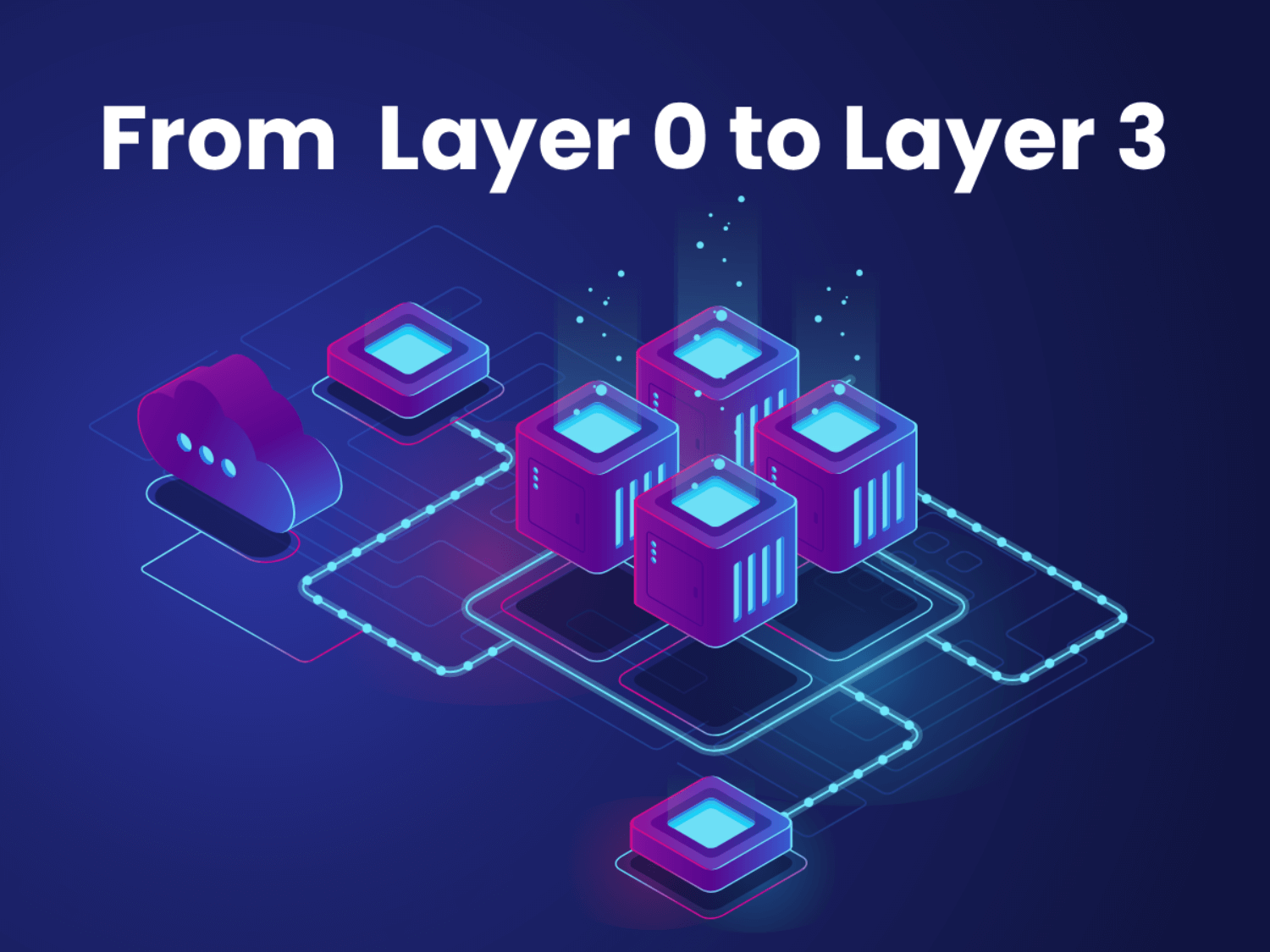
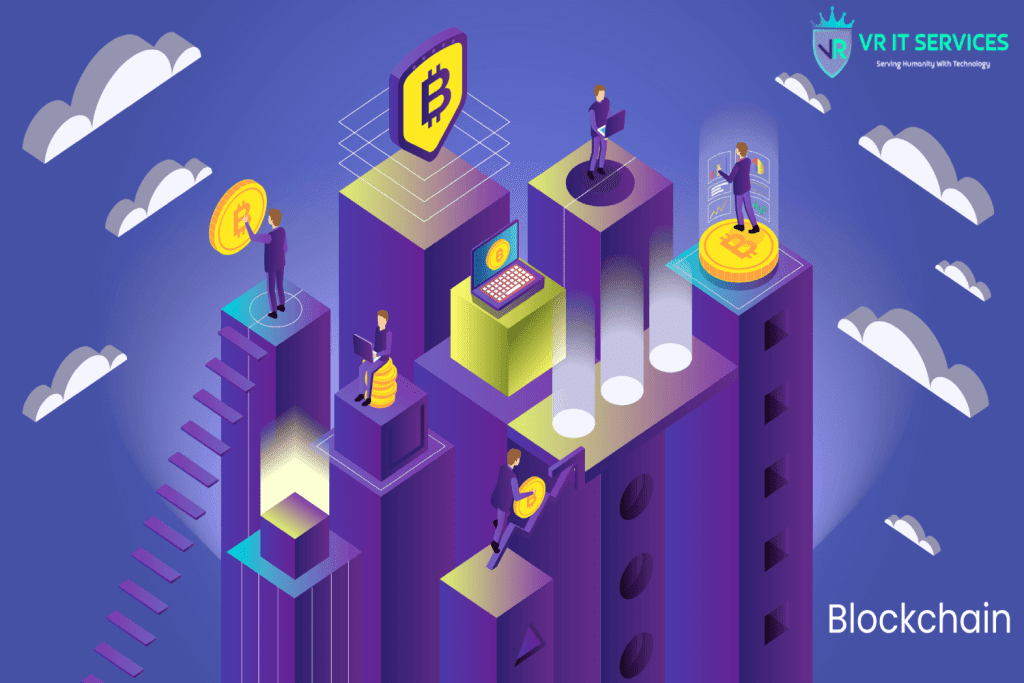
Blockchain Technology has matured well beyond its early association with cryptocurrencies like Bitcoin and Ethereum. For enterprises, the concept of blockchain is now viewed as a structural stack from foundational infrastructure to user-facing applications.
In this article, we dissect the blockchain stack Layers 0 through 3 and explore its relevance and strategic potential for business. We’ll interweave discussions on Layer 0 blockchain, Layer 1, Layer 2 solutions, Layer 3 applications, and how enterprises can harness each layer from blockchain scalability, interoperability, and consensus mechanisms, to real-world business blockchain applications, smart contracts, and industry-specific use cases in finance, supply chain, and beyond.
1. The Blockchain Stack: A Modular Architecture
In technology, layered architectures promote modularity, clarity, and specialization. Blockchain, too, is best understood as a layered ecosystem—each layer addressing distinct challenges of scalability, security, and decentralization, and together enabling powerful decentralized networks.
Why is this important for business?
Enterprises require clarity on how blockchain components map to real-world infrastructure, development, user interaction, and compliance. Recognizing these layers helps businesses choose the correct tools, allocate investments wisely, and build scalable, secure, and practical blockchain solutions.
Overview of Layers
- Layer 0: Foundational infrastructure enabling cross-chain communication and network connectivity.
- Layer 1: Core blockchain protocol handling transactions, consensus, and smart contract execution.
- Layer 2: Scaling solutions that alleviate Layer 1 congestion via off-chain processing.
- Layer 3: Application layer—user-facing apps like wallets, oracles, APIs, and enterprise tools.
2. Layer 0 Blockchain: The Foundation Beneath All
What Is Layer 0?
Layer 0, often referred to as the infrastructure or protocol layer, provides the underlying foundation supporting entire blockchain ecosystems. This includes networking protocols, hardware, and mechanisms for cross-chain interoperability—not only between Layer 1 blockchains but also with Layer 2 and 3 components.
Key features of Layer 0 include:
- Interoperability: Using hubs, relay chains, or cross-chain protocols (e.g., Cosmos IBC, Polkadot Relay Chain) to enable communication across chains.
- Scalability: Permitting parallel processing and alleviating congestion by distributing work across multiple chain instances.
- Modularity & Flexibility: Allowing developers to build customized blockchains with tailored consensus mechanisms on top of a standard infrastructure.
- Shared Security: Tools like Polkadot’s shared relay-chain security model secure multiple parachains collectively.
Prominent Layer 0 examples include Polkadot, Cosmos, Avalanche (with its subnet architecture).
Business Perspective on Layer 0
For enterprises, Layer 0 offers:
- Cross-Platform Integration: This means blockchain solutions aren’t siloed; they can interoperate with other networks, partners, or ecosystems.
- Scalable Infrastructure: Parallel processing via modular chains supports high-volume business transactions (e.g., supply chain, IoT telemetry, digital identity systems).
- Faster Innovation: One can deploy a dedicated chain with custom rules and governance, without building consensus or network logic from scratch.
- Resilience & Security: Shared security models reduce the risk of individual chain vulnerabilities; interoperability allows fallback pathways between networks.
Risks and Considerations
- Centralization Risk: Relay chains (like Polkadot) might centralize some control, posing potential failure points.
- Cross-chain vulnerabilities: Bridging across chains can introduce attack surfaces (i.e., bugs in protocol connectors).
- Operational complexity: A multi-chain ecosystem is inherently more complex to manage, requiring robust orchestration, monitoring, and governance strategies.
Business Example
Imagine a multinational supply-chain consortium using Polkadot’s Substrate to deploy separate chains per region, but with cross-chain interoperability via its relay chain. Spain, India, and Brazil nodes can transact and share data seamlessly, while maintaining autonomy and scalability.
3. Layer 1 Blockchain: The Base Protocol
What Is Layer 1?
Layer 1 represents the fundamental blockchain, think Bitcoin, Ethereum, Solana, Cardano. It handles:
- Transaction recording and validation
- Consensus mechanisms (e.g., PoW, PoS)
- Smart contract execution (e.g., Ethereum Virtual Machine)
- Security and decentralization
This is where the core logic of blockchains resides.
Business Implications
Layer 1 networks are essential when businesses require:
- Proven security (e.g., Bitcoin or Ethereum’s long track record)
- Smart contract capabilities for automation (e.g., DeFi, identity, tokenization)
- Ecosystem richness (availability of wallets, dApps, developer tools)
However, they tend to suffer from scalability bottlenecks and high gas fees during congestion.
Key Considerations for Business
- Throughput constraints: Ethereum can become congested, raising costs and slowing settlement.
- Governance and upgrades: Layer 1 chains evolve slowly; enterprise governance may prefer permissioned or private protocols.
- Regulatory exposure: Public Layer 1 chains have transparent ledgers; sensitive data may require privacy controls.
Real-World Use Cases
- Finance: Tokenizing assets, executing cross-border payment smart contracts, or using Layer 1 as settlement backbone.
- Enterprise Tokenization: Using Ethereum or Binance Smart Chain to tokenize loyalty points, carbon credits, or digital twins.
Layer 1 at Work: Concrete Examples by Chain
Layer 1 is easiest to grasp through specific networks rather than in the abstract, because each chain made different architectural decisions. The trade-offs below are the ones that actually determine whether a chain is a viable foundation for your application.
| Chain | Layer 1 design | Where it excels | Trade-off you accept |
|---|---|---|---|
| Bitcoin | UTXO model, proof of work, no native general-purpose computation; script is intentionally limited | Maximum security and predictability; the deepest liquidity and settlement value of any chain | Very low expressiveness. Anything beyond simple transfers requires off-chain systems, side chains, or layer 2 — which is why Bitcoin’s ecosystem is defined by its second layer rather than by the base chain |
| Ethereum | Account-based, proof of stake, general-purpose smart contract VM | The default for smart contracts; largest developer ecosystem, deepest DeFi and NFT liquidity, most tooling and standards (ERC-20, ERC-721) | Transaction costs and block times are poor for consumer applications. Fees spike under load, which is the single biggest reason so much activity migrated to layer 2 |
| Solana | Account-based, proof of stake, parallel execution with a time-ordered ledger | High throughput and sub-cent fees; genuinely usable for consumer and trading applications where Ethereum is not | Noisy-neighbour and hardware requirements; the architecture has had availability incidents, and client diversity has historically been a concentration concern |
| BNB Smart Chain | Account-based, proof of stake, EVM-compatible with a validator set producing blocks | EVM compatibility means Solidity code and tooling largely port unchanged; very low fees drive high retail activity | More centralised than its peers: a small validator set can censor transactions, which matters if your use case depends on genuine censorship resistance |
| Polygon PoS | EVM sidechain secured by a staking model, with an increasingly Ethereum-aligned roadmap | A familiar execution environment at very low cost; a common landing spot before moving to Ethereum layer 2 | Historically a separate security domain, so it is not equivalent to settling directly on Ethereum. Evaluate its current security model rather than assuming equivalence |
| Avalanche | EVM-compatible subnets, each an independently configurable chain | Purpose-built chains per application or per organisation, with customisable validator and execution parameters | Subnet customisation is real flexibility but also real operational responsibility — you own the validator set, upgrades, and uptime |
| Arbitrum and Optimism | Optimistic rollups settling to Ethereum; layer 2 rather than independent chains | EVM-equivalent execution with Ethereum-level security assumptions; the dominant home for scaling Ethereum today | Withdrawals carry a challenge period, historically around a week, which constrains designs needing fast, guaranteed liquidity movement |
| zkSync and Starknet | Zero-knowledge rollups; validity proofs posted to Ethereum | Withdrawals are fast because validity is proven rather than challenged; Starknet’s execution layer (Cairo) targets higher computation density | Zero-knowledge proofs are computationally expensive to generate, and the proving stack is substantially more complex to operate correctly |
How to choose, rather than which is best
There is no best layer 1, because the decision is dominated by your constraints rather than by rankings. Work through four questions:
- What is your target user? A consumer application with unpredictable traffic is constrained by fees and throughput. An enterprise settlement system with predictable low volume may prefer fewer, more expensive, more final transactions.
- Which ecosystem are your developers and users already in? For most teams the deciding factor is not the chain’s properties but whether the libraries, auditors, and users they already have exist there. An EVM chain is usually chosen for tooling reasons, and that is a legitimate engineering decision.
- Do you need composability with existing DeFi? If your application must interact atomically with an existing lending or exchange protocol, that protocol’s chain effectively chooses for you.
- What is your tolerance for additional trust assumptions? Every rollup, bridge, and oracle adds a layer where your assumptions differ from “the chain is correct”. Document which ones you are making rather than treating them as free.
A useful default for most commercial applications in 2026: build on an EVM-compatible environment, deploy to a layer 2 for cost, and keep the contract logic chain-agnostic so migrating later is a deployment change rather than a rewrite. Reserve layer 1 directly for applications where the security or finality of the base settlement is the actual requirement.
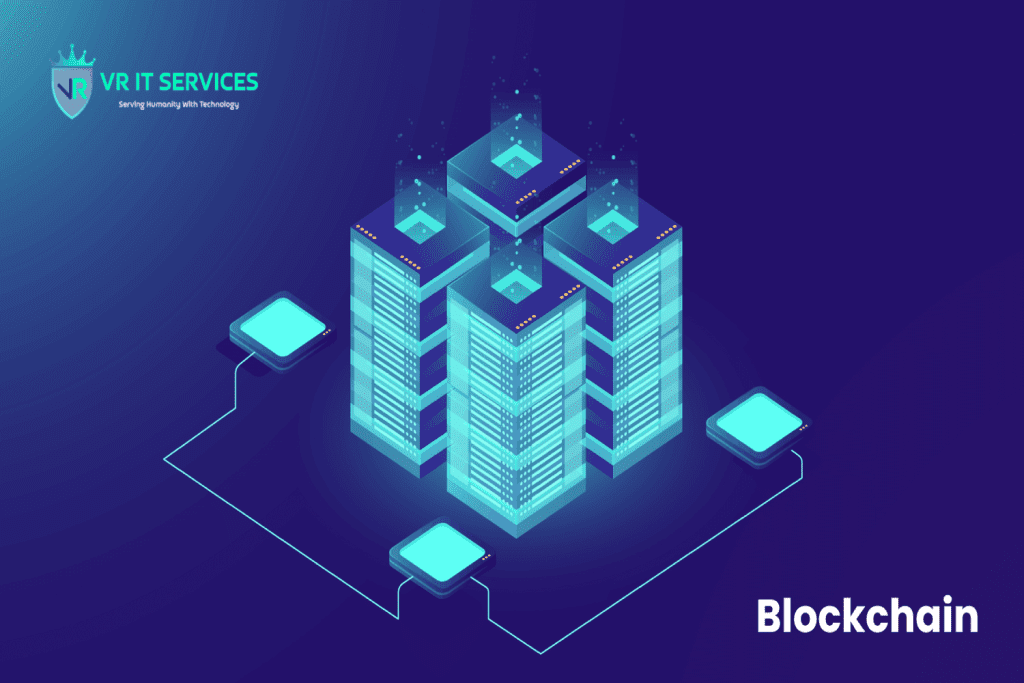
Blockchain Stack Layers: What Is Layer 2?
Layer 2 comprises protocols built on top of Layer 1 to enhance scalability, speed, and reduce transaction costs. Techniques include:
- Rollups (Optimistic, ZK)
- Sidechains
- State channels (e.g., Lightning Network)
- Plasma variants
These solutions process transactions off-chain and finalize on-chain to relieve pressure from Layer 1 networks.
Why It Matters to Businesses
- Lower fees & faster transactions: Ideal for high-volume or microtransaction use cases (e.g., IoT, micropayments).
- Near-instant confirmation: Enhances UX for supply chain tracking, point-of-sale systems, or real-time settlement.
- Flexible deployment: Allows bespoke Layer 2 networks tailored to business rules, privacy, and compliance.
Example Scenarios
- Supply Chain: Each shipment’s state updates happen on Layer 2; only final summaries are settled on Layer 1—saving costs while preserving auditability.
- Finance: High-frequency trading or insurance microclaims can be processed swiftly off-chain and batched to Layer 1 for finality.
- Gaming: In-game assets and frequent transfers operate on Layer 2, with periodic checkpoints logged to Layer 1.
5. Layer 3: Application Layer & Business Apps
What Is Layer 3?
Layer 3 sits atop the blockchain stack, encompassing user-facing applications:
- dApps (DeFi, supply chain trackers, identity wallets)
- APIs, middleware, wallets, oracles
- AI agents interacting with blockchain (e.g., smart contract assistants), UI/UX layers simplifying blockchain interaction for non-technical users.
Why Layer 3 Is Critical for Business
- User experience (UX): Abstracts technical complexity, making blockchain accessible to end-users or internal staff.
- Domain-specific Customization: Enables vertical solutions—like logistics dashboards, finance platforms, identity management systems—built on secure blockchain infrastructure.
- Integration with enterprise systems: Layer 3 allows connection to ERPs, databases, CRM, IoT, and identity systems.
Example Use Cases
- A blockchain supply-chain portal integrating RFID data, smart contract-based compliance checks, interactive dashboards, and traceable provenance—all running on Layer 3, backed by Layer 2 efficiency, Layer 1 security, and Layer 0 interoperability.
- A DeFi application combining lending protocols, dashboards, analytics, and AI-driven alerts, while relying on underlying layers for throughput and trust.
6. Interoperability, Scalability, and Security: The Trilemma
Blockchain often faces the scalability trilemma: balancing security, decentralization, and scalability. The layered architecture helps alleviate this:
- Layer 0 addresses interoperability and shared security
- Layer 2 boosts scalability without compromising security
- Layer 3 enables flexibility and adoption without altering core protocols
Together, this modular stack helps businesses adopt blockchain strategically, focusing on innovation at the right layers.
7. Adoption Strategies for Business
A. Assess Your Needs by Layer
- Need cross-chain integration or shared infra? Explore Layer 0 like Polkadot or Cosmos.
- Require robust consensus and smart contracts? Leverage Layer 1—public or private (e.g., Ethereum, Hyperledger).
- Volume, speed, low cost critical? Build on Layer 2 solutions (rollups, sidechains).
- Need end-user applications, dashboards, analytics? Develop Layer 3 middleware or apps.
B. Hybrid and Consortium Models
Enterprises often prefer permissioned or consortium-based Layer 1 chains for privacy, with Layer 2 networks for scalability, and Layer 3 portals for UX. Optionally, Layer 0 interoperability connects to external public networks.
C. Incremental Rollout: PoC → Pilot → Scale
- Proof of Concept with Layer 3 mockups, connecting to testnets on Layer 1 or 2.
- Pilot with real transactions, refining consensus, fees, UX.
- Scale across geographies using Layer 0-enabled chains offering interconnectivity.
D. Governance, Security, and Compliance
- Design governance at each layer: who manages consensus (L1), upgrades (L0), app policies (L3).
- Build security audits—particularly for bridges and smart contracts.
- Address regulatory constraints—e.g., KYC/AML at application level, data privacy compliance (GDPR, etc.), and on-chain traceability.
8. Business Use Cases by Layer
Supply Chain & Logistics
- Layer 3: Web portals for track-and-trace, compliance dashboards.
- Layer 2: Fast updates from IoT devices; batching settlement.
- Layer 1: Verification of critical milestones.
- Layer 0: Connecting cross-border logistics partners’ blockchains for data sharing.
Finance & Trade Finance
- Layer 3: Lending/derivatives UI, dashboards, risk alert systems.
- Layer 2: High-throughput payments or microclaims.
- Layer 1: Settlement and clearing.
- Layer 0: Interoperability between multiple banks’ chains or central bank digital currencies (CBDCs).
Healthcare & Identity
- Layer 3: Patient portals, identity verifiers, consent dashboards.
- Layer 2: Secure data exchanges across providers or devices.
- Layer 1: Health data logs, cryptographic timestamping.
- Layer 0: Interoperability between hospitals, governments, insurers.
9. Blockchain Platforms Comparison: A Business Overview
| Platform / Layer | Highlights for Business Use |
|---|---|
| Polkadot (L0) | Shared security, customizable parachains, interoperability |
| Cosmos (L0) | IBC-enabled zone architecture; modular chain ecosystems |
| Avalanche (L0) | Subnet flexibility; high throughput |
| Ethereum (L1) | Smart contract ecosystem; mature tooling |
| Bitcoin (L1) | Immutable ledger, trust anchor, limited programmability |
| Optimism / Arbitrum (L2) | Scalable rollups over Ethereum |
| Lightning Network (L2) | Instant micropayments for Bitcoin |
| Custom L3 apps | Business specific UI, dashboards, agent triggers |
10. Blockchain Innovation for Business: What’s Next
- AI + Blockchain: Layer 3 smart agents interacting with contracts, predictive analytics, automated compliance triggers.
- Cross-domain interoperability: Using Layer 0 to connect finance, healthcare, and supply-chain systems.
- Decentralized governance: DAOs for consortium networks—enterprises experimenting with token-based governance, voting, and DAO-based decisioning at Layer 0 or Layer 3.
- Composable enterprise apps: Modular Layer 3 tools that businesses can mix, match, and deploy quickly across verticals.
11. Implementation Steps for Businesses
- Define business goals: What value are you trying to deliver—traceability, speed, cost-saving?
- Map to blockchain layers: Choose where your business activity sits best in the stack.
- Select platforms: Based on cost, security, interoperability, and governance.
- Prototype: Build lightweight Layer 3 proof-of-concepts on testnets or private versions.
- Pilot: Test with real users, transactions, and integrate with ERP/CRM.
- Scale gradually: Expand to additional partners, geographies, or connect via Layer 0 to other networks.
- Govern & audit: Deploy robust security and governance models (especially for multi-layer systems).
- Measure ROI: Focus on transaction costs, speed, transparency, user adoption, and compliance improvements.
12. Recap: Why the Blockchain Stack Matters for Business
- Layered clarity: Understand where to innovate—foundation, protocol, speed, or user interface.
- Scalable & modular: Add capabilities without rebuilding the entire infrastructure.
- Interoperable: Integrate with partners using Layer 0 frameworks—reduces silos.
- Cost-efficient: Use Layer 2 for high-volume, Layer 1 for trust.
- UX-ready: Layer 3 apps make blockchain usable for business teams and end-users.
- Strategically adaptable: Easily evolve across technology cycles.
Conclusion
Blockchain is no longer a single monolithic system. It’s a modular stack, each layer offering unique contributions and opportunities. Businesses that understand the roles of Layer 0 (infrastructure and interoperability), Layer 1 (core security and consensus), Layer 2 (scalability), and Layer 3 (user-facing applications) can design agile, cost-efficient, and future-proof solutions. Whether in supply chain, finance, healthcare, identity, or enterprise automation, aligning your strategy with the blockchain stack empowers innovation. While managing complexity, risk, and governance effectively.
By following a layered adoption strategy, Starting with clear business goals, prototyping at Layer 3, Optimizing using Layer 2, securing via Layer 1, and connecting across ecosystems with Layer 0—businesses unlock blockchain’s transformative potential more predictably and sustainably.